

Human Health Sciences, B.S.
THIS IS AN ON CAMPUS PROGRAM THOUGH SELECTED COURSES MAY BE OFFERED ONLINE
The Human Health Sciences degree offers a unique interdisciplinary training with course work in training in various aspects of healthcare, ethics, policy, inclusion, integrity, community, and intentionality, and other relevant topics.
CURRICULUM and PROGRAM OF STUDY
Why study across health disciplines?
Health needs are complex, and no single profession addresses every aspect of a person’s health. Human Health Sciences students study several disciplines to understand the different knowledge and skills each brings to care. This foundation helps graduates communicate and collaborate across professions to advance patient care quality and outcomes.
What You’ll Learn Across Disciplines
| Discipline and courses | What students learn |
|---|---|
| CSD 250 Communication Sciences & Disorders Courses | How speech, language, hearing, and swallowing develop and change across life, and how communication differences can affect a person’s daily life. |
| CST 105 & CST 408 Communication Studies Courses | How to communicate clearly and ethically, and how health messages, campaigns, interpersonal communication, and healthcare institutions shape health communication. |
| GRO 201 Gerontology Courses | How aging is experienced in the United States and how we can think critically about the conditions and changes that affect later life. |
| HDF 111 or another approved HDF course Human Development & Family Studies Courses | How development, relationships, and social settings shape people’s lives. The focus depends on the selected course, which may cover development across the lifespan, a particular life stage, or family relationships. |
| KIN 220 Kinesiology Courses | How evidence-based principles of wellness, fitness, and lifestyle management can inform personal health plans. |
| NTR 213 Nutrition Courses | How nutrients and other factors affect their use in the body and contribute to human nutrition. |
| PCS 308 Peace & Conflict Studies Courses | How interpersonal and group tensions arise and how communication and other techniques can address conflict in settings such as workplaces and communities. These skills can support collaboration in healthcare teams and organizations. |
| HEA 307 Public Health Education Courses | How disease burden and health systems differ across countries, and how public health approaches can address challenges where resources are limited. |
| SWK 215 Social Work Courses | How social welfare programs, community helping resources, social policies, and social work practice shape people’s access to support and services. |
| CTR 231 Sports Management & Recreational Therapy Courses | How therapeutic activities are used with people with varied needs in clinical and community settings, including how activities are prescribed and documented. |
Two Concentrations
Students can pick a concentration in Allied Health Studies or Health Professions.
1. Allied Health Studies
Allied Health Sciences prepares students for careers in areas like children, family and social services, gerontology, or the business side of medicine.
Curriculum Guide for Allied Health Sciences (PDF)
2. Health Professions
Health Professions provides preparation for graduate level professional training in areas like occupational therapy, physician assistant, physical therapy, medicine, and dentistry.
Curriculum Guide for Health Professions (PDF)
Minors
Prepare for supportive roles in healthcare by minoring in areas such as:
- Business management
- Human development and family studies
- Gerontology
Possible Career Paths After Graduation
The Human Health Sciences degree prepares students for entry-level allied health careers and further study in graduate health professions programs.
To access a growing list of career and academic opportunities, reference the 2026 Health Professions List (PDF)


Student Perspective
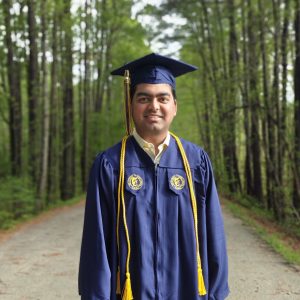
“UNCG has played a significant role in shaping my path, and I am excited about the opportunities ahead of me on my journey toward a career in health care administration.”
Arnav Gandhi, undergraduate student in Human Health Sciences